Tuesday, 17 February 2026 »  Login
in

Sporting Hero's

Quizzing? Movies? Music? Tech? Cricket? God? Whatever your interests be, there are hundreds of your alter-egos on fullhyd.com - it's a whole city out there!

Moderator: The Moderator Team

by akhilis2cool » Tue Aug 02, 2005 12:20 pm

Sergei Bubka


Image Image


He attained such a level of supremacy in the pole vault that, in the end, he was only competing against himself.


At age eleven, his first vault of 8' 10-5/8" was a surprise. Later vaults confirmed the power of the Ukrainian who, on July 31, 1994, reached 20' 1-1/4", establishing the last of his 35 world records (17 outdoor and 18 indoor).


Early Jumper


Sergei was born on Dec. 4, 1963, in Voroshilovgrad, Ukraine, then part of the Soviet Union. With the help of his coach, Vitaly Petrov, he began to excel at local meets, first by making that jump of 8' 10-5/8" at age 11, and later, at 16, by leaping over 16 feet.


In 1981, he placed seventh at the European Junior Championships, ending his anonymity on the international stage. At those heights, his potential elicited wonder. In fact, despite placing eighth in the national championships, the national coach, Igor Ter-Ovanessian, made him part of the team that would participate in the first World Track and Field Championships to be held in Helsinki in 1983.


There he leapt to fame. With a height of 18' 8-1/4", he captured the first world championship held in this competition. From that point on, his performances would prove that his triumph was not a fluke. He improved every year. In 1984, he registered his first world records, the first coming at an indoor meet with a jump of 19' 3/4", a record he broke three times. Later, at an outdoor meet, he jumped 19' 2-1/4", which he himself broke four times. That year, he set a total of nine world records.


Everything would have gone perfectly if not for the Communist boycott of the Olympic Games in Los Angeles. Had he participated, he surely would have taken his first gold medal. But, he was patient and, four years later, in Seoul, he won.


Then came the World Championships. With the exception of the most recent, in Seville, he won them all - Rome '87, Stuttgart '93, Gothenburg '95 and Athens '97.


His "interruptions"

Bubka's dominance seemed unbreakable. He had his ups and downs, but he always came back almost immediately. His records were broken twice in indoor meets, once by the Frenchman Thierry Vigneron (19' 2-1/4" in 1984) and another time by the American Billy Olson (19' 2-1/2" in 1985).


Vigneron bettered his archrival's outdoor record with his own by a half-inch, jumping 19' 4-3/4". But, 10 minutes later, Sergei imposed his trademark quality to beat Vigneron by an inch and a half, leaving the Frenchman in second.


Bubka has proved unreachable even against himself. He has been unable to beat his own indoor record of 20' 2-1/8", achieved on Feb. 21, 1993. He came close with another world-record outdoor jump of 20' 2" on June 31, 1994. Both are current records that will be difficult to surpass.


Source


Wikipedia
People are crazy, at times are strange. I am locked-in tight, I am out of range.
I used to care, but things have changed.
User avatar
akhilis2cool
God!
God!
 
Posts: 11476
Joined: Sat Apr 03, 2004 1:43 pm
Location: Camp Swampy

by akhilis2cool » Wed Aug 03, 2005 11:58 am

I dont want to be the only one posting here. Please feel free to talk post information about sport icons you admire.


Vishwanathan Anand

Image


It is a game associated with the royalty. But in modern India there's only one Nawab of chess. And he is 31-year-old Vishwanathan Anand, master of a sport dominated by black and white squares.


With his lightning fast moves and his uncanny ability to topple the best of champions, Anand has taken the game to dizzy heights. More than that, he has motivated a generation of serious-minded young people to take up the sport and excel in it. For the likes of D.V. Harikrishna, Koneru Humpy and Tanya Singh he is the role model who constantly inspires them with his incredible feats.


Apart from American Bobby Fischer who won the world championship in 1972 Anand is the only non-Russian to come close to winning the world title twice, his latest victory came at the Mainz Championship where he annihilated the formidable Vladimir Kramnik of Russia.


Anand, started 2001 with some incredible performances. He also won the advance chess title in Leon for an unprecedented third time in a row and for good measure added a title in Merida in Mexico. But the star performance came in the Duel of the Champions in the all-important Chess Classic of Mainz in Germany in June. Pitted against Kramnik, who had pulled ahead of him in terms of ratings, Anand warded off an early challenge and won this duel played over a 10-game rapid format.


Inspite of the hype that surrounds him, the chess prodigy prefers to maintain a low profile and let his game do all the talking. His winning the world title last year and Mainz Championship this year is the culmination of a long journey which started when he was taught the first moves by his mother, Sushila Vishwanathan.


Seeing his obsessive love for the game his parents decided to encourage him in his pursuits. His father who was posted as a consultant in the Philippines was his constant source of motivation. He arranged for Anand’s trip to the Philippines for the World Junior Championships at his own expense


Read More about him here

And here
People are crazy, at times are strange. I am locked-in tight, I am out of range.
I used to care, but things have changed.
User avatar
akhilis2cool
God!
God!
 
Posts: 11476
Joined: Sat Apr 03, 2004 1:43 pm
Location: Camp Swampy

by ycr007 » Wed Aug 03, 2005 1:59 pm

Image


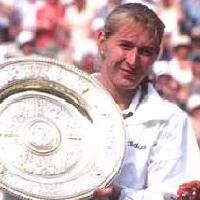
Stefanie Maria "Steffi" Graf (born June 14, 1969 in Mannheim, Germany) is a former World No. 1 woman tennis player from Germany, and widely considered one of the greatest tennis players in history. She won 22 Grand Slam singles titles. In 1988, she became the first player to achieve the "Golden Slam" – capturing all four Grand Slam titles and the Olympic Gold Medal in the same year. She was ranked the World No. 1 player for a record 377 weeks and is the only player to have won all four of Grand Slam at least four times apiece.


Career Highlights


* 1983: Became the 2nd youngest player to receive a ranking at 13 years, 4 months old (No. 124). Won her first professional match on March 5.

* 1984: Won an Gold Medal in the tennis demonstration at the Los Angeles Olympics. Defeated Sabrina Goles in the Finals in 3 sets. Reached her first career final.

* 1985: Reached 3 more tournament finals and moved into the Top 10, finishing the year ranked 6th.

* 1986: Won 8 tournaments, including the German Open, Amelia Island, Hilton Head, and US Clay Courts. Reached the semis of the US Open. Was ranked #3 in the world at the end of the year. Named WTA Tour Most Improved Player.

* 1987: Won her first Grand Slam event at the French Open, defeating top seed Martina Navratilova in 3 sets in the finals. Lost to Navratilova in the finals of both Wimbledon and the US Open. Became the #1 player on the world on August 17 and held the #1 ranking for a record 186 consecutive weeks until March 10, 1991.

* 1988: Had probably the best season in tennis history. Won the Australian Open, French Open, Wimbledon, and US Open, becoming the 3rd woman and 5th player overall to win the Grand Slam. Also won a Gold Medal at the Olympics in Seoul, becoming the first person in tennis history to win the Golden Grand Slam. She also is the only person to win a Grand Slam on four different surfaces (carpet, clay, grass, hardcourt). Was 72-3 in matches. Named WTA player of the year for the 2nd straight year. Won her only Grand Slam doubles title with Gabriela Sabatini at Wimbledon. Won 11 tournaments for the 2nd consecutive year. Had a 46 match win streak from May 9 to Nov 18.

* 1989: Won the Australian Open, giving her 5 consecutive Grand Slam victories, one short of the record. Lost in the finals of the French Open to Arantxa Sanchez Vicario, but came back to win Wimbledon and the US Open, giving her 7 wins in the last 8 Grand Slams and 11 consecutive Grand Slam Finals. Had the 2nd best match record of all-time at 86-2 (.977). Won a career-high 14 titles. Had a career-high 66 match win streak from June 26 to May 20, 1990. Her US Open win made her the only person ever to win and successfully defend all 4 Grand Slams.

* 1990: Won the Australian Open for the 3rd straight year, giving her 8 wins in the last 9 Grand Slam events. Lost in the finals of the French Open, extending her streak to 13 consecutive Grand Slam finals. Lost in the semis at Wimbledon and the finals at the US Open. Ranked #1 in the world for the fourth straight year. Won 10 tournaments, including the Canadian Open. Named the WTA Player of the Year for the 4th straight year.

* 1991: Dropped to #2 in the world on March 10, after holding the #1 ranking for a record 186 weeks. Reached the semis of the French Open and US Open and won at Wimbledon. Her victory at Wimbledon made her the sixth woman to win 10 Grand Slam events. Regained the #1 ranking from Aug 5-12 and from Aug 19-Sept 8. She won her 500th career match on Oct 2. Won at least one Grand Slam event for the 5th straight year.

* 1992: Missed the Australian Open due to injury. Lost in the finals of the French Open 2-6, 6-3, 8-10, to Monica Seles, but beat Seles 6-2, 6-1 in the finals of Wimbledon. Won a Silver Medal at the Olympics in Barcelona, losing to Jennifer Capriati in the finals.

* 1993: Lost in the finals of the Australian Open to Monica Seles in 3 sets. Went on to win the French Open, Wimbledon, and the US Open. Regained the #1 ranking on June 7. Became the only person to win all 4 Grand Slams in the '90s and one of very few people to win all 4 Grand Slams in 2 different decades. Her victory at Wimbledon was her 13th career Grand Slam title, moving her into 5th place on the all-time list, and her 20th career Grand Slam final. Graf won at least 3 Grand Slams for the 3rd time in her career, setting a new record. Won her 600th career match on March 14.

* 1994: Won the Australian Open, becoming the 2nd woman to win a non-calendar year Grand Slam. She became the 1st person to win both a calendar year and a non-calendar year Grand Slam on separate occasions. On Feb 7, her ranking average was 441.1746, the highest ranking ever achieved by any player. Won 57 consecutive sets, setting a new record. Lost in the semis of the French Open and the 1st round of Wimbledon. Reached the finals of the US Open and, bothered throughout the match by back problems, lost to Arantxa Sanchez Vicario 6-1, 6-7 (7-3), 4-6.

* 1995: Did not enter the Australian Open due to injury, but won the French Open, Wimbledon, and US Open. Beat Arantxa Sanchez-Vicario in the finals of the French Open and Wimbledon (4-6, 6-1, 7-5, in an incredible match--game 11 of the third set had 32 points!) and defeated Monica Seles in the finals to win her 4th US Open. Her US Open win gave her 18 career Grand Slam wins, tying her for 3rd place on the all-time list with Navratilova and Evert. Became the first person in history to win all four Grand Slams at least 4 times each. Won at least one Grand Slam for the 9th consecutive year and at least 3 Grand Slams for the 4th time. Her Wimbledon title was her 6th, tying her for 3rd place on the all-time list. Won her 750th career match in the Wimbledon semis. Was ranked #1 for the 300th week on Oct 8. Defeated Anke Huber in the finals of the WTA Tour Championships in the only five set match of her career. Moved into 3rd place in tournaments won with her 89th career victory at Lipton.

* 1996: Once again missed the Australian Open because of an injury and once again won the other three, making it six in a row that she played and probably just missing two consecutive Grand Slams only because of injuries! Again, just like last year, she Defeated Arantxa Sanchez-Vicario in the finals of the French Open (6-3, 6-7, 10-8, fighting off several match points, in one of the greatest matches ever) and Wimbledon (6-3, 7-5), and beat Monica Seles in the finals of the US Open (7-5, 6-4). This moved her into second place all-time with 21 Grand Slam titles, a second place tie with 5 French Opens, 3rd place tie with 7 Wimbledons, 4th place tie with 5 US Opens, and 3rd with 29 Grand Slam finals. Graf once again won the year end championships and ended the year ranked #1 for a record 8th time. She also extended her streaks to 10 straight years with at least 1 Grand Slam title and 7 tournament wins! It was the 5th time Graf had won at least 3 Grand Slams in a year, extending her record. Broke Martina Navratilova's record of most total weeks as the #1 player in the world and she also won her 100th career tournament during the year. Was named WTA player of the year for a record 8th time.

* 1997: Finally returned to the Australian Open and won her record 45th consecutive Grand Slam match in the third round, but lost to Amanda Coetzer in the fourth round. A week later, she withdrew from a tournament in Japan just before the finals against Martina Hingis because of a knee injury that required surgery. Missed about 3 months and lost her #1 ranking to Hingis during that time after a record total of 377 weeks, basically 1/4 of her life! Came back and won a warmup tournament for the French Open, but once again lost to Coetzer, this time in the quarterfinals. She then had to undergo knee surgery again because it wasn't done properly the first time and missed the remainder of the season, breaking her streaks of 10 consecutive years with at least 1 Grand Slam and 11 consecutive years with at least 7 titles. She also dropped below #2 in the WTA rankings for the first time since early 1987!

* 1998: Graf's comeback was delayed many times and she missed both the Australian and French Opens before she finally made it back. Wimbledon was her first Grand Slam in just over a year, and while she still showed flashes of brilliance, she also was very rusty and got upset in the 3rd round by Natasha Zvereva (her first loss in over 20 matches against Zvereva). Had a similar performance in the US Open, losing in the 4th round, but did manage to win 3 titles and work her way back up the rankings into the top 10 again. Finished the year ranked #9.

* 1999: Continued her comeback at the Australian Open, where once again, she did one round better than her last Grand Slam, losing to Seles in the quarterfinals. Soon after, she became the WTA career leader in prize money. Kept moving up the ranks and was #6 going into the French Open, the 4th Grand Slam since she came back. Although still missing half a step compared to a couple years ago, that was still good enough to dominate the early rounds. She faced #2 Lindsay Davenport in the QF, and won in a tough 3-setter. Then she had a rematch with her old rival Seles (3 seed), which also went to 3 sets, Graf pulling away in the 3rd, setting up a dream final with current #1 Martina Hingis, her record 9th French Open final. Hingis won the first set and was up a break in the second, serving for the match, but Graf, showing the true heart of a champion, fought back to take the second set and went on to win the third, claiming her 22nd Grand Slam and first since '96, moving her to 2nd with 6 French Opens, one short of Chris Evert's record! She is the only player ever to beat the 1, 2, and 3 seeds in a Grand Slam. After the match, she announced that she would not play another French Open, saying that she could not hope to top her performance in this one. Graf moved up to #3 in the rankings and was seeded #2 at Wimbledon where she breezed through the early rounds again. She again went to three sets in the QF and SF, but won both against Venus Williams and Mirjana Lucic, setting up a rematch with Lindsay Davenport in the finals, her 9th Wimbledon final. Graf lost in straight sets in the finals, maybe in part due to the fact that she was playing with bronchitis, but still reached her 31st Grand Slam final and second in a row, proving that she was, after a two year comeback, once again 0the best player in the game. After the match, she said it would be her final Wimbledon. Graf entered the US Open and later would say that she made a mistake in saying that she wouldn't play the French Open or Wimbledon again, but after a hamstring injury at the TIG Tennis Classic, on Friday the 13th of August, Steffi Graf, winner of 22 Grand Slams, the #1 player in the world for a record 377 weeks, the greatest player in the history of tennis, currently ranked #3, and two-time defending Grand Slam finalist, retired at the age of 30...


More on Steffi
User avatar
ycr007
Level 2 Deity
Level 2 Deity
 
Posts: 9334
Joined: Tue Oct 12, 2004 10:50 pm
Location: Hyderabad!!! Browser:Firefox

by akhilis2cool » Wed Aug 03, 2005 2:46 pm

good work ycee :D

previous page padhlete to achcha hota
People are crazy, at times are strange. I am locked-in tight, I am out of range.
I used to care, but things have changed.
User avatar
akhilis2cool
God!
God!
 
Posts: 11476
Joined: Sat Apr 03, 2004 1:43 pm
Location: Camp Swampy

by CtrlAltDel » Wed Aug 03, 2005 2:58 pm

ycr007 wrote:Image
why does that ^^^ pic remind me of Mahesh Babu?
wtf? i no longer care if my posts hurt yr feelings :roll:
Love me or hate me, u cant ignore me :D
User avatar
CtrlAltDel
God!
God!
 
Posts: 14824
Joined: Sat Jan 26, 2002 5:02 pm
Location: by the Workshop

by 3 T'z » Wed Aug 03, 2005 6:29 pm

MARK PHILIPPOUSSIS


Image


Mark Anthony Philippoussis (born November 7, 1976, Melbourne, Australia) is an Australian tennis player of Greek heritage (turned professional 1994) currently residing in Florida, USA. Coached by his father, Nick, Philippoussis, and a right-hander, he has played tennis since he was six years of age. He was briefly coached by former 1987 Wimbledon champion Pat Cash during his junior years, which ended in an acrimonious split. Philippoussis' style of play is to hit every shot hard, and this accomplished by his amazing natural ability. Many players hit serves hard, but only Mark Philippoussis can hit a groundstroke at the same speed. This is what seperates him from other players like Andy _, and he is widely regarded as the hardest hitter in the history of the game, next to Lou Hode.


In 1994, he finished third in single ranking for juniors. Philippoussis also finished as junior doubles champion with Ben Ellwood in Australia, Wimbledon, and Italy. He turned professional in 1994. In 1995, at the age of 19, he was the youngest player in the year-end top 50. In 1996, he reached the 4th round of the Australian Open upsetting Pete Sampras in the 3rd round and in doubles with Pat Rafter, he advanced to semifinals at Wimbledon and US Open. On May 25, 1997, he recorded a personal best 142.3 mph serve in a game he lost to Albert Costa.


In 1998, he reached his first Grand Slam final at the US Open losing to Rafter. On March 29, 1999, he entered the top 10 for the first time and stayed there for 11 weeks. He advanced to the quarter finals at Wimbledon for the second straight year and retired in 2nd set against no. 1 Pete Sampras after having won the first set. He suffered a moderate cartilage tear in his left knee and underwent arthroscopic surgery four days later on July 6. He returned to professional tennis seven weeks later in Indianapolis and lost in his opening match. He did not play again until October 12 in Singapore where he lost in 2nd Round.


He finished 1999 in the top 20. 2000 was the fourth consecutive year in which he finished in the top 20. He reached the 4th round at the Australian Open losing to eventual champion Andre Agassi. He defeated Pete Sampras 8-6 in the fifth set at Roland Garros in a 3rd round match but lost in the 4th round. For the third consecutive year, he made it to the quarterfinals at Wimbledon losing again to Andre Agassi. He appeared in his second Olympics, losing in 3rd Round to eventual gold medalist Yevgeny Kafelnikov. He finished 2002 in the top 100 (7th time in 8 years) despite not winning a title. He moved from Miami to San Diego, California area in September 2002.


Philippoussis at the 1996 US OpenPhilippoussis is also a regular member of the Australian Davis Cup squad. In 1999 Philippoussis, along with doubles partner Jelena Dokic, won Australia's first ever Hopman Cup title by beating Sweden 2 rubbers to 1 in the final.


A hallmark of Philippoussis' game is his powerful serve, which gave him his nickname "The Scud", and his sturdy groundstrokes. During a 2003 Wimbledon tennis match against Andre Agassi (6-3, 2-6, 6-7 (4-7), 6-3, 6-4), he set a new Australian tennis record of 46 aces served in a match, just three aces short of the overall ATP Tour record then held by Richard Krajicek.


After three knee operations and a protracted comeback, Philippoussis avowed a new seriousness to his sport. He made himself available regularly for Davis Cup, hired a new physical trainer who instituted a gruelling fitness regime, and took up surfing as his new recreation. It seemed to work, as he made the 2003 Wimbledon final, finally losing to an on-fire Roger Federer 7-6, 6-2, 7-6.


Philippoussis broke a two year singles title drought by winning the Shanghai Open in 2003. On 30 November 2003 Philippoussis defeated Juan Carlos Ferrero of Spain to win the fourth match of the Davis Cup final in Melbourne, thus securing the title for Australia. This victory in front of his home crowd won him a place in the affections of the Australian sporting public which some of his behaviour in earlier years - including refusal to play Davis Cup - had put in jeopardy.


2004 proved a disastrous year in terms of his tennis career and public profile. After shouldering most of the blame for losing Australia's David Cup tie with Sweden with an unexpected below par performance, Philippoussis then struggled through to the Wimbledon finals in June 2004. By the close of the year, Philippoussis had failed to win a single ATP tennis match and finished with his lowest ever ranking since turning professional in 1994. In October 2004, a much publicized affair with Australian singer Delta Goodrem had soured and seriously damaged his public standing when newspapers revealed that Paris Hilton had professed her interest for Philippoussis. This only added to his "playboy" image with the public siding with the popular Goodrem. As of June 2005, he is engaged to model Alexis Barbara.


Image


Singles Titles

1996 Toulouse

1997 Scottsdale, Arizona

1997 Munich

1997 Queen's Club, London

1998 Memphis, Tennessee

1999 San Jose, California

1999 Indian Wells, California

2000 San Jose, California

2001 Memphis, Tennessee

2003 Shanghai, China
Ahh...wHo Da BlOoDy HelL...CaReZ..!?!
User avatar
3 T'z
Level 3 Star User
Level 3 Star User
 
Posts: 1568
Joined: Mon Jan 03, 2005 3:46 am
Location: <..YaHiN kAhIn..>

by CtrlAltDel » Wed Aug 03, 2005 6:54 pm

my hero for today....:D


Image


enuff said! (aka i am too lazy to look up more info n paste it here)
wtf? i no longer care if my posts hurt yr feelings :roll:
Love me or hate me, u cant ignore me :D
User avatar
CtrlAltDel
God!
God!
 
Posts: 14824
Joined: Sat Jan 26, 2002 5:02 pm
Location: by the Workshop

by 3 T'z » Wed Aug 03, 2005 7:02 pm

CtrlAltDel wrote:my hero for today....:D


Image

enuff said! (aka i am too lazy to look up more info n paste it here)


Perfect pick!

n no info required bout this hero ! :)
Ahh...wHo Da BlOoDy HelL...CaReZ..!?!
User avatar
3 T'z
Level 3 Star User
Level 3 Star User
 
Posts: 1568
Joined: Mon Jan 03, 2005 3:46 am
Location: <..YaHiN kAhIn..>

by Ar!e$ » Wed Aug 03, 2005 11:17 pm

Image


Marat Safin
was born in Moscow on 27th January 1980 to Misha and Rausa Islanova. It has been said that Marat Safin is a born champion. His mother, Rausa, was a former top 10 Russian player who used to take baby Marat with her when she practiced at the local Spartak club, which was managed by his father, Mikhail. Marat began to play tennis at the age of 6. Rausa served as her son's coach from ages 6 to 13.
At the age of 13, with the training facilities and opportunities in Russia almost non-existent, Marat and his mother visited a tennis academy in Valencia. There they met Maria Pasqual, former director of Spanish women s tennis, who was asked to assess his potential. Pasqual recognized the enormous natural talent of the young Marat and persuaded a wealthy Swiss client into sponsoring Marat and keeping him at the academy.

So, at the age of 14, Marat left home to travel to Spain. All alone, Marat was faced with the prospect of learning a new language and honing his tennis skills in a foreign land. Over the next 4 years, Marat trained in Valencia under the guidance of Pasqual and Rafael Mensua. During this time, Marat learned to speak Spanish fluently, and it is one of the three languages that he speaks.

In 1997 Marat moved more than 200 ranking positions with an 11-5 match record in Challenger play. He won his first title in Espinho, and soon afterwards turned pro. Marat made his Pro Tour debut at the Kremlin Cup in Moscow, losing to Carlsen in the 1st round.


In 1998 Marat grabbed the attention of the game's best as well as the sponsors when he stormed into Roland Garros and upset Andre Agassi in the first round. He then went on to take out the defending champion Gustavo Kuerten in the next round before eventually losing to Cedric Pioline in the fourth round. He also made his first tour semifinal in Long Island and reached the fourth round of the US Open where he lost to Pete Sampras. By the end of the year, Safin had gained nearly 150 ranking spots and had finished the year in the Top 50. Marat was named the RADO Player to watch for 1998.

His upward climb continued during his second year on tour. In 1999, he was the No. 2 Russian (behind world No. 2 Kafelnikov). Marat won his first ATP title in Boston defeating Greg Rusedski while only dropping one set in five matches. He was also one of three teenagers (Ferrero, Hewitt) to win an ATP title during year. Marat helped Russia to the Davis Cup SF by winning fifth and decisive matches in 1st round and quarterfinal ties.

In February, Marat advanced to back-to-back semifinals in St. Petersburg and Rotterdam. During the clay court circuit, he advanced to the 4th round at Roland Garros for the second straight year and in August, made it to the semifinal in Amsterdam.

During the European indoor circuit in November, he reached his first TMS final in Paris with wins over No. 5 Kuerten, Courier (QF) and Chang (SF) before losing to Andre Agassi in four sets. He has also reached the last 16 round of 3 of the 5 Grand Slams he participated in. All of these accomplishments saw Marat reach the top 25 ranking for the first time in his career.

The year 2000 was both up and downhill for Marat. After a less than promising start that was highlighted by a few difficulties, Marat turned his year around with back-to-back titles in Barcelona and Mallorca. By this time he was working with former Top 10 Andrei Chesnokov as a coach. Like with all thrill rides, Marat made a quick and stunning run along the circuit and in a very brief time had captured his first Tennis Masters Series title in Toronto, and made the final in Indianapolis. His coaching carousel began with the subsequent hiring and firing of two more coaches, Alexander Volkov and Tony Pickard.


The highlight of Marat's young career came weeks later when he won his first Grand Slam title at the US Open, where he demolished former champion Pete Sampras in the final.

The following week he made the long journey to Tashkent and only dropped one set in five matches. He became first player to win an ATP title the following week of a Grand Slam title since Ivan Lendl in 1985. He continued his strong play by winning the TMS Paris title, defeating Philippoussis in a 3 hour 29 minute marathon.

Marat's training on the red clay of Spain was paying off as he was one of four players to win at least 25 matches on clay (25-9) and hard (36-15) courts. He led the ATP in aces (921).

Marat let the ATP with seven titles and held the number 1 ranking spot for a short time. He became youngest player to finish No. 2 since 19-year-old Boris

Becker in 1986... He also became first player under age of 21 to win at least seven titles in a season since Mats Wilander. He led ATP in singles matches won (73), finals reached (9) and was second in singles matches played (100).

He entered his first Tennis Masters Cup in Lisbon with a 75-point lead in ATP Champions Race over Kuerten and was twice within one victory of becoming youngest year-end No. 1. He was named ATP Most Improved Player of Year and named 2000 Newcomer of the Year at Laureus World Sports Awards in Monte Carlo.

2001 was another year of ups and downs. Marat started strong with a 4th round in the Australian Open and a final in Dubai. However, a back injury cramped Safin's play and set him back for 3 months. He began working with former No. 1 Mats Wilander at this time. He made his turnaround at All England Club where he reached his first QF, losing to eventual champion Goran Ivanisevic in four thrilling sets. Marat then reached the semi-finals at the US Open and successfully defended his titles in Tashkent and St. Petersburg. He finished 2001 just outside the Top Ten at No. 11.


After a disappointing and injury plagued 2001, Marat came into the new year of 2002 ready to rumble. He pounded his way to the Australian Open final, beating Pete Sampras and Tommy Haas along the way, but he stumbled in the final, losing to Thomas Johansson. The final was played on Marat's 22nd birthday, but despite the disappointing loss, he gave one of his famous witty speeches and the Swedish fans even sang happy birthday to him.

During the clay court circuit, Marat reached the final of TMS Hambürg without dropping a set, before losing to Roger Federer. He continued his strong play at Roland Garros where he reached the semifinal for the first time before losing to Ferrero. Marat struggled in the next two Grand Slam tournaments, losing in the 2nd RD at Wimbledon and the US Open. His relationship with Mats Wilander ended in the middle of this year and Marat began working with his manager, Amit Naor, and his good friend Denis Golovanov, as coaches. Eventually Naor stopped travelling with Marat but his relationship with him continues, just not as a coach.

Marat managed to salvage another disappointing year with a win over the world's number 1 player Lleyton Hewitt at the TMS Paris. Given a newfound confidence, he went on to lead Russia to their first ever Davis Cup victory. He again was one of the top 8 players in the world to reach the Tennis Masters Cup in Shanghai.

In 2003, Marat finished out of Top 50 for first time since 1997. His play was limited to 13 tournaments after suffering throughout the season with a left wrist injury.

In 2004, the No. 1 Russian battled back from an injury-riddled 2003 season to finish in the Top 4 for third time in five years. He won three ATP titles, including two ATP Masters Series shields, and reached two other finals. Marat was the runner up to Roger Federer in the Australian Open, losing in straight sets after gruelling victories over Andre Agassi and Andy _.

After the unexpected final appearance at the Australian Open, Safin's comeback took another turn for the worse, with early round losses throughout the summer, including a first round loss at the US Open to Thomas Enqvist.

Safin took on a new coach, Peter Lundgren late in 2004. He went on to win the title in Beijing followed by wins in Madrid and Paris TMS events. Safin managed to pull his ranking up from No. 86 to finish the year No. 4 in the world, making his fourth appearance in the Tennis Masters Cup in Houston.


2005 started out great with Marat finally winning his long awaited second Grand Slam title in Australia. After taking out the defending Champion Roger Federer in the semi-final, Safin went on to take the title from Australia's own Lleyton Hewitt.
Image
User avatar
Ar!e$
Level 2 Lord
Level 2 Lord
 
Posts: 3683
Joined: Fri Dec 24, 2004 4:30 pm
Location: !n Ur HeArT$...

by spamtaneous » Wed Aug 03, 2005 11:58 pm

CtrlAltDel wrote:
ycr007 wrote:Image
why does that ^^^ pic remind me of Mahesh Babu?


lol.....truly.... :lol:
User avatar
spamtaneous
Level 1 Lord
Level 1 Lord
 
Posts: 2431
Joined: Wed Jul 20, 2005 11:42 pm

by ycr007 » Thu Aug 04, 2005 12:28 pm

Image

Alexander Popov


Date of birth: November 16, 1971


Place of birth: Sverdlovsk


Hometown: Canberra (AUS)


Weight: 90 kg


Height: 2,00 m


Club: Moscow


Coach: Gennadi Touretski


High performances: 1991: LC European Championships - 1st 100m free (49.18)

1992: Olympic Games - 1st 50m free (21.91), 1st 100m free (49.02)

1993: LC European Championships - 1st 50m free (22.27), 1st 100m free (49.15)

1994: LC World Championships - 1st 50m free (22.17), 1st 100m free (49.21)

1995: LC European Championships - 1st 50m free (22.25), 1st 100m free (49.10)

1996: Olympic Games - 1st 50m free (22.13), 1st 100m free (48.74)

1997: LC European Championships - 1st 50m free (22.30), 1st 100m free (49.09)

1998: LC World Championships - 1st 100m free (48.93), 2nd 50m free (22.43)

1999: LC European Championships - 2nd 100m free (48.82), 3rd 50m free (22.32), SC World Championships - 5th 50m free (22.10)

2000: Olympic Games - 2nd 100m free (48.69), 6th 50m free (22.24), LC European Championships - 1st 50m freestyle (21.95), 1st 100m freestyle (48.61), 1st 4x100m free relay (3:18.75), 1st 4x100m Medley relay (3:39.29)


2002: SC World Championships - 3rd 50m free (21.55), 3rd 4x100m free relay (3:11.24), LC European Championships - 2nd 100m free (48.94), 5th 50m free (22.35), 1st 4x100m medley relay (3:36.21)


2003: LC World Championships - 1st 50m free (21.92), 1st 100m free (48.42), 1st 4x100m medley relay (3:14.06), 2nd 4x100m medley relay (3:34.72)


2004: Olympic Games - 4th 4x100m free relay (3:15.75), 4th 4x100m medley relay (3:35.91); LC European Championships - 1st 50m free (22.32)


Background: Popov did not start swimming until he was 8, and after overcoming a fear of the water. Unknown to many, Popov was a backstroker first and only converted to freestyle after joining the squad of much respected coach, Gennadi Touretski in 1990. He spends over 6 hours a day in the pool at the Australian Institute of Sport in Canberra, where he has trained since his coach moved there in 1993, and swims 80-90km a week, much more than most sprinters.

He was holidaying in Moscow (after the Olympic Games of Atlanta) when he got into major trouble. On the 24th of August 1996, Popov was returning home from a birthday party with his friends when he ran into some watermelon sellers. His friends started arguing with the sellers about the purchase of a watermelon and that is when the brawl started. He was stabbed in the stomach, damaging his kidneys and grazing his lungs. He was rushed to the Moscow City Hospital No. 31 where he underwent a three hour emergency operation. Alexander's first meet after that incident was on February 22, 1997.

He has got several nicknames: Big Dog - the nickname the US swim team give him. It is supposed to be a compliment and comes from the saying "You've got to let the big dog eat"; The Ice Man - referring to Popov's calmness before a big race; "Sasha" - what his coach calls him. It is Russian nickname for the name Aleksandr.

He is married to Russian swimmer, Daria ("Dasha") Shmeleyva, who had been his girlfriend for 2 years. The couple's first child, Vladimir, was born on October 1st, 1997.

His sports hero is Ukrainian polevaulter Sergei Bubka, "because he's been at the top for so long", and because he markets himself well.
User avatar
ycr007
Level 2 Deity
Level 2 Deity
 
Posts: 9334
Joined: Tue Oct 12, 2004 10:50 pm
Location: Hyderabad!!! Browser:Firefox

by ycr007 » Thu Aug 04, 2005 12:29 pm

akhilis2cool wrote:good work ycee :D
previous page padhlete to achcha hota


Lo......Is it wrong for two people to Admire the same Sportsperson :?
User avatar
ycr007
Level 2 Deity
Level 2 Deity
 
Posts: 9334
Joined: Tue Oct 12, 2004 10:50 pm
Location: Hyderabad!!! Browser:Firefox

by akhilis2cool » Thu Aug 04, 2005 1:03 pm

ycr007 wrote:
akhilis2cool wrote:good work ycee :D
previous page padhlete to achcha hota

Lo......Is it wrong for two people to Admire the same Sportsperson :?
Not at all!

I thot u did not read that page :D saaary.
People are crazy, at times are strange. I am locked-in tight, I am out of range.
I used to care, but things have changed.
User avatar
akhilis2cool
God!
God!
 
Posts: 11476
Joined: Sat Apr 03, 2004 1:43 pm
Location: Camp Swampy

by ycr007 » Thu Aug 04, 2005 1:07 pm

I Did......I Added the Career Highlights While Keeping Wikipedia's Intro..... :lol: :lol:
User avatar
ycr007
Level 2 Deity
Level 2 Deity
 
Posts: 9334
Joined: Tue Oct 12, 2004 10:50 pm
Location: Hyderabad!!! Browser:Firefox

by fl » Thu Aug 04, 2005 1:16 pm

Image

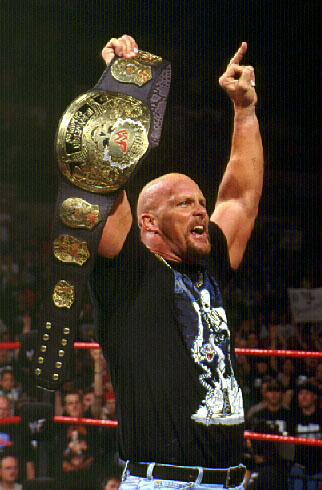
Stone Cold Steve Austin


Real Name: Steve Williams


Born: Dec 18, 1965


Size: 6'3" 252 lbs


Hometown: Victoria, Texas


Current Titles:


* Intercontinental Champoinships (2)

* Tag Team Champion with Dude Love

* World Wrestling Federation Champion


Favorite Quote:

"And that's the bottom line, 'cause Stone Cold said so!"


Finishing Move: Stone Cold Stunner


Stone Cold Steve Austin started in the WCW as Stunning Steve Austin. He left to go to the ECW. Much controversy surrounded his 'firing'. Whe he came to the WWF he was called the Ringmaster.


Although he is known for his 'break the rules' attitude, his 3:16 motto and his poor relationship with Vince McMahon, his most notable characteristic is his famous line "And that's the bottom line, 'cause Stone Cold said so!!!!!!


Some other interesting facts about Stone Cold Steve Austin is that he played football on a scholarship at North Texas State University.


He made friends with flyin' Brian Pillman while in the WCW. As the "Hollywood Blonds," Austin and Pillman became very popular.


In 1995 Austin signed with WWF. In 1996 he won the King of the Ring by beating Jake the Snake. It was here that the famous 3:16 quote became popular.
I'm not in favour of Senseless Windows Bashing.
However,I'm all for Bashing Windows Senseless.
User avatar
fl
Level 2 Star User
Level 2 Star User
 
Posts: 1347
Joined: Sun Nov 21, 2004 9:57 am
Location: mumbai

by akhilis2cool » Thu Aug 04, 2005 1:42 pm

Eknath Solkar

Image


Eknath Solkar, cricketer,was born on March 18, 1948. He died of diabetes on June 26, 2005, aged 57.


Gifted and fearless leg-side close fielder whose catch-per-match ratio was unequalled in Test cricket


From: Timesonline.co.uk


A GOOD 20 years before the South African Jonty Rhodes was hailed as the only player of the modern era to merit a place in a Test match XI on the basis of his fielding alone, Eknath Solkar — a long-haired all-rounder, lean of limb and exceedingly humble of origin — was precisely such a player. Unlike Rhodes, who patrolled the covers, Solkar was a close-in fieldsman who stood, for most of his 27 Tests — spanning 1969 to 1977 — at forward short leg. There, he plucked catches out of thin air as batsman after batsman prodded tentatively forward to the peerless Indian spin quartet of Bedi, Chandrasekher, Prasanna and Venkataraghavan.

Figures, by themselves, can sometimes be prosaic — and Solkar’s Test match batting and bowling record indicates, perhaps, a rather uneventful career. He scored 1,028 runs at an average of 25.83 (numbers that do not reveal his gutsy utility in a fragile batting line-up), and took a mere 18 wickets at 59.44 each, mostly opening the bowling left-arm at a pace that was clocked, charitably, at military medium. His unsung chore was, with Abid Ali — who trundled in with the new ball from the other end — to take the shine off as quickly as possible, so the spinners could come on to weave their magic, often as early as the tenth over of an innings.


Solkar’s real role, however, was to field. And here, for a change, his figures do him justice. More than that, they reveal him for what he was — a fearless catcher, relentlessly prehensile (to use a word beloved of the more florid cricket writers of his time), who stood close enough to a batsman to pick his back pocket. In all the years since Test cricket began, Solkar has the highest catch-per-match ratio of any cricketer (allowing for a minimum of 50 catches). In 27 Tests, he caught 53 batsmen, to give him a ratio of 1.96 catches per match. (The next best catcher, Australia’s Bobby Simpson, took 110 catches in 62 matches, at a ratio of 1.77).


All the top catchers in Test history bar Solkar have fielded in the slips, where catches are frequently of the regulation variety, made as much by the fast bowlers as by a fieldsman himself. Solkar, by contrast, made the catches himself at forward short leg — lunging, hurling his body about, grabbing at balls that fizzed off half-cock blades. He fielded close-in to spinners — bowlers who were unafraid to flight the ball, which meant that they were often hit very hard by batsmen.


Fielding at short leg, therefore, required immense valour, given that cricket, at the time, permitted no more than an abdomen guard to a fieldsman. Now, with shin guards and helmets, short leg is a fielding position almost like any other. In Solkar’s time, it was a hardship posting for which few men volunteered.


Hardship, of course, was something Eknath Dhondu Solkar knew from a young age. The son of the groundsman (who had, effectively, the menial status of a mali, or gardener) at the swanky Hindu Gymkhana club in Bombay, “Ekki” grew up in a bare little hut on the edge of the club’s premises. A volunteer ball boy and net bowler, he attracted the attention of some senior Bombay cricketers with the vigour of his throws from the deep and the untiring quality of his medium-pace in the nets. In time, he played for — and captained — the Indian Schoolboys team (no mean feat in what was then an acutely class and caste-conscious country), and graduated to the Ranji Trophy, India’s pre-eminent first-class competition, where he represented Bombay.


Solkar was often described by Indians — with gentle derision — as the “poor man’s Garry Sobers”. He was an all-rounder, like the great West Indian, and left-handed to boot. He batted in the middle order and, like Sobers, bowled with the new ball as well as the old, turning his arm over for the occasional spell of “slow left-arm straights”, as his colleagues dubbed his orthodox spin. And on his maiden tour abroad in 1971, Solkar did, in fact, become involved in an on-field altercation with Sobers, then captain of the West Indies.


In the first Test, at Sabina Park, Solkar and Dilip Sardesai were involved in a long stand that had blunted the West Indian bowling. The ball had gone out of shape and Sobers — very much the local grandee — was assisting the umpires in picking a replacement, one that Solkar, then a callow 23-year-old in his sixth Test, feared would be harder and newer than the ball being replaced. When he demanded to see the replacement, Sobers said to him, dismissively, “What does it matter, man? You’re only going to play and miss!” To which Solkar retorted, “You play your bloody game, and I’ll play mine.” That was on the first day of a five-Test series: India, perhaps buoyed by Solkar’s defiance of the game’s greatest all-rounder, went on to win the series, its first win in the West Indies.


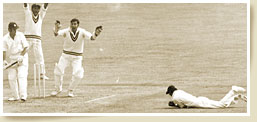
That year India achieved another series win away, this time in England, when its youthful side, captained by Ajit Wadekar, humbled Ray Illingworth’s team 1-0 in a three-match series. Of all the Indians to play a part in the victory in the last match, at the Oval, Solkar was at the forefront. Chandrasekhar’s blitz of top spinners, googlies and leg-breaks may have toppled England’s batsmen, but Solkar’s catches, especially the one he took off Alan Knott in the second innings, ensured that England would remain prone. He described that catch most eloquently to an interviewer years later: “Alan Knott played our spinners better than any of his team-mates, always looking to use his feet. He had made 90 in the first innings so I thought it was worth taking a risk by standing further up to grab any half-chances early on. Sure enough, he made a defensive prod, and I dived in front and took the catch. I was wearing a heart-shaped pendant around my neck that scratched my chest and got me bleeding.


It didn’t matter. The match turned from there and India won their first series in England.”


Image

read More abt the catch HERE
People are crazy, at times are strange. I am locked-in tight, I am out of range.
I used to care, but things have changed.
User avatar
akhilis2cool
God!
God!
 
Posts: 11476
Joined: Sat Apr 03, 2004 1:43 pm
Location: Camp Swampy

by Ar!e$ » Thu Aug 04, 2005 3:42 pm

Image


Mohammad Kaif

India

Player profile

Full name Mohammad Kaif
Born December 1, 1980, Allahabad, Uttar Pradesh
Current age 24 years 246 days
Major teams India, Derbyshire, Gloucestershire, Leicestershire, Uttar Pradesh
Batting style Right-hand bat
Bowling style Right-arm offbreak


Wisden overview
An elegant batsman who evokes memories of the young Azharuddin, Mohammad Kaif comes from the cricketing backwater of Uttar Pradesh. He first came to prominence with his performances for India's Under-19s: he captained the side, which also included Yuvraj Singh, Ajay Ratra and Reetinder Sodhi, that won the Youth World Cup of 2000. Kaif's assured strokeplay, and composure that belied his age, earned him a Test cap against South Africa when he was only 20. Though the selectors subsequently discarded him, stints at the Australian Cricket Academy and its Indian equivalent in Bangalore helped to iron out some of the kinks in his technique. Recalled to the one-day side during the 2001-2002 home season, he made an impact with some steady and purposeful batting. But it was during the 2002 NatWest series in England that he truly hit the high notes, culminating in a magnificent unbeaten 87 as India successfully chased 326 for victory in the final. A superb century followed - against Zimbabwe in the ICC Champions Trophy - but he struggled at times to kick on after that, having a fairly quiet World Cup. His first experience of the county circuit was also a mixed bag, some typically dynamic efforts interspersed by a string of low scores. An exceptional cover fielder with the ability to bowl offspin, he could be a fixture in the one-day squad for years to come.
Dileep Premachandran (May 2004)
Image
User avatar
Ar!e$
Level 2 Lord
Level 2 Lord
 
Posts: 3683
Joined: Fri Dec 24, 2004 4:30 pm
Location: !n Ur HeArT$...

by CtrlAltDel » Thu Aug 04, 2005 4:08 pm

Kaif is immensely talented and a gr8 striker, but he has to be more consistant in batting. just good consistant fielding wont earn him a place in the team.
wtf? i no longer care if my posts hurt yr feelings :roll:
Love me or hate me, u cant ignore me :D
User avatar
CtrlAltDel
God!
God!
 
Posts: 14824
Joined: Sat Jan 26, 2002 5:02 pm
Location: by the Workshop

by CtrlAltDel » Thu Aug 04, 2005 4:24 pm

wtf? i no longer care if my posts hurt yr feelings :roll:
Love me or hate me, u cant ignore me :D
User avatar
CtrlAltDel
God!
God!
 
Posts: 14824
Joined: Sat Jan 26, 2002 5:02 pm
Location: by the Workshop

by 3 T'z » Thu Aug 04, 2005 4:58 pm

Hey FL no fair me waz gonna post bout austin....i'll neways :D

Image


"Stone Cold" Steve Austin


Statistics

Stage names "Stunning" Steve Austin

"Superstar" Steve Austin

The Ringmaster

Height 6'2" (188 cm)

Weight 252lbs (114 kg)

Born December 18, 1964

Hometown Victoria, Texas

Trained by Chris Adams

Debut 1989

Stephen Williams (born December 18, 1964) better known by his stage name "Stone Cold" Steve Austin, is a professional wrestler from Victoria, Texas.


He took the ring name Steve Austin when he turned professional in 1990 because there was already a prominent, if not massively famous, wrestler with the ring name (and real name) Steve Williams. Austin states that he received the blessing of actor Lee Majors to use the name "Steve Austin", which was first used as the name of the character Majors played in the 1970s sci fi TV series The Six Million Dollar Man. Austin was trained by "Gentleman" Chris Adams amongst others


World Wrestling Federation / Entertainment

In January 1996, Austin joined the World Wrestling Federation. Initially, Austin used the moniker "The Ringmaster", holder of Ted DiBiase's unsanctioned "Million Dollar Belt", a title DiBiase created for himself in 1989. Not liking his ring name at all, Austin asked WWF writers to come up with a new name for his character that would suggest a ruthless, cold-hearted persona; according to legend and Mick Foley in particular, the writers suggested "Chilly McFreeze" and "Ice Dagger." Austin then came up with the name "Stone Cold" Steve Austin,


Austin 3:16

Austin's genuine rise to superstardom began on June 23, 1996, when he was booked to win the WWF's annual King of the Ring single-elimination tournament on PPV. After toppling Marc Mero in the semi-finals, he defeated the veteran Jake "The Snake" Roberts in the final; a popular 80s star who was then incorporating a moral, Christian message in his gimmick. After the match, Austin cut a promo during his coronation which viciously mocked Jake's reformed lifestyle: "You sit there and you thump your Bible, and say your prayers, and it didn't get you anywhere! Talk about your Psalms, talk about John 3:16... Austin 3:16 says I just whipped your ass!" Austin 3:16 ultimately became one of the most popular catchphrases in wrestling history, but not instantly. Austin later turned face, as spontaneous fan support for him grew larger by the week.


Interestingly, he was not originally intended to win the tournament. The WWF originally booked Hunter Hearst Helmsley, now Triple H, to win. However, the WWF changed its plans a few weeks before the PPV because of the MSG Incident. For more details, see Clique.


Strangely, Austin was somewhat underused by the WWF for the next few months, and was mired in pointless midcard feuds with the likes of Yokozuna and Triple H, still firmly in the WWF doghouse. One thing drove Austin on though: the in-exile and unhappy WWF legend Bret Hart. Austin spoke about Hart constantly and taunted him relentlessly on TV. Hart accepted Austin's challenge and returned to the WWF in October 1996. At the Survivor Series that November, Hart cleanly pinned Austin in a well-paced match which helped create the foundations for the eventual year-long feud between the two. Austin's ever-growing popularity and notoriety multiplied after his strong showing and in spite of his loss. The match came hot on the heels of a highly controversial incident broadcast live on Raw, which saw Austin "break into" the injured Brian Pillman's house, with Pillman allegedly brandishing a gun.


Austin then won the 1997 Royal Rumble match two months later after already being eliminated and then sneaking back into the ring unnoticed to eliminate the "real" winner, Bret Hart. After a subsequent, complex turn of real-life events largely revolving around Shawn Michaels, Hart and Austin were booked at the 11th hour for a re-match at WrestleMania 13 in March 1997. Hart defeated Austin in a submissions match refereed by Ken Shamrock, but the iconic image of the night was Austin's grimacing, bloody face being cheered on massively by the live Chicago crowd as the bitter Hart refused to release his patented Sharpshooter.


After a PPV rematch with Hart, a PPV WWF Title shot against The Undertaker, and a brief tag team runs with both Shawn Michaels and Mick Foley, Austin challenged Bret Hart's younger brother, the late Owen Hart. Austin's anti-Hart and anti-Canada stance made him easily the most popular star the WWF has had in over a decade, but he certainly wasn't popular up in Calgary at the fondly-remembered "Canadian Stampede" PPV in July 1997. Austin was almost booed out of the country by the fiercely Hart-loyal crowd, and the sight of a handcuffed Austin being led out of the arena by "policemen" while flipping the bird to the fans is still potent. Four weeks after that, at SummerSlam 1997, disaster struck when Austin suffered a near-career ending neck injury as a result of an botched piledriver by Owen. After being briefly paralyzed, Austin recovered and was able to win the match as planned, but the incident would force him to take time off for surgery in 1999, and would shorten his career.


Trademark quotes

[edit]

As "Stone Cold" Steve Austin

"Austin 3:16 says I just whooped your ass!"

"And that's the bottom line, 'cause Stone Cold said so!"

"Give me a Hell Yeah!"

"I'll open up a can of whoop ass on you!"

"I will stomp a mudhole in your ass and walk it dry!"

"DTA: Don't trust anybody."

"Oh Hell Yeah!"

"I'm here to drink beer and raise hell!"

"What?"
Ahh...wHo Da BlOoDy HelL...CaReZ..!?!
User avatar
3 T'z
Level 3 Star User
Level 3 Star User
 
Posts: 1568
Joined: Mon Jan 03, 2005 3:46 am
Location: <..YaHiN kAhIn..>

by spamtaneous » Thu Aug 04, 2005 5:01 pm

is WWF for real.... :? :?:
User avatar
spamtaneous
Level 1 Lord
Level 1 Lord
 
Posts: 2431
Joined: Wed Jul 20, 2005 11:42 pm

by 3 T'z » Thu Aug 04, 2005 5:06 pm

spamtaneous wrote:is WWF for real.... :? :?:


Itz called WWE now...

real donno...but nowdayz it just crap..
Ahh...wHo Da BlOoDy HelL...CaReZ..!?!
User avatar
3 T'z
Level 3 Star User
Level 3 Star User
 
Posts: 1568
Joined: Mon Jan 03, 2005 3:46 am
Location: <..YaHiN kAhIn..>

by spamtaneous » Thu Aug 04, 2005 5:14 pm

3 T'z wrote:
spamtaneous wrote:is WWF for real.... :? :?:


Itz called WWE now...
real donno...but nowdayz it just crap..


i used to watch it when i was a kid......never thought it was fake then...


but when i saw it couple of days back.....it realised it was verrry much fake
User avatar
spamtaneous
Level 1 Lord
Level 1 Lord
 
Posts: 2431
Joined: Wed Jul 20, 2005 11:42 pm

by fl » Thu Aug 04, 2005 5:17 pm

3 T'z wrote:Hey FL no fair me waz gonna post bout austin....i'll neways :D
Image


damn

u like austin too!!

and u are a female :shock: :shock: :shock:

is this a dream or is it for real
I'm not in favour of Senseless Windows Bashing.
However,I'm all for Bashing Windows Senseless.
User avatar
fl
Level 2 Star User
Level 2 Star User
 
Posts: 1347
Joined: Sun Nov 21, 2004 9:57 am
Location: mumbai

by fl » Thu Aug 04, 2005 5:23 pm

3 T'z wrote:
spamtaneous wrote:is WWF for real.... :? :?:


Itz called WWE now...
real donno...but nowdayz it just crap..


its not real

they have script writers and all

it was fun when eric biscoff and vince mcmahon were against each other (when the monday night war was on)

now its just one big ompany

now he as got even ECW :(


but it was damn fun when austin was there

:D :D :D
I'm not in favour of Senseless Windows Bashing.
However,I'm all for Bashing Windows Senseless.
User avatar
fl
Level 2 Star User
Level 2 Star User
 
Posts: 1347
Joined: Sun Nov 21, 2004 9:57 am
Location: mumbai

PreviousNext      

Return to Special Interest Groups

Who is online

Users browsing this forum: No registered users and 1 guest

cron
ADVERTISEMENT
SHOUTBOX!
{{todo.name}}
{{todo.date}}
[
]
{{ todo.summary }}... expand »
{{ todo.text }} « collapse
First  |  Prev  |   1   2  3  {{current_page-1}}  {{current_page}}  {{current_page+1}}  {{last_page-2}}  {{last_page-1}}  {{last_page}}   |  Next  |  Last
{{todos[0].name}}

{{todos[0].text}}

ADVERTISEMENT
This page was tagged for
solkar "a heart-shaped pendant"
harat tenis balls h yedrabad
soccering academies in hyderabad
Stunning Steve Austin
INSPITE OF HAVING KNEE SURGERY WON GOLD MEDAL IN OLYMPICS
Follow fullhyd.com on
Copyright © 2023 LRR Technologies (Hyderabad) Pvt Ltd. All rights reserved. fullhyd and fullhyderabad are registered trademarks of LRR Technologies (Hyderabad) Pvt Ltd. The textual, graphic, audio and audiovisual material in this site is protected by copyright law. You may not copy, distribute or use this material except as necessary for your personal, non-commercial use. Any trademarks are the properties of their respective owners.