
Congratulatios, Latest "Lord" Lady "enigma&qu
Moderator: The Moderator Team
113 posts
• Page 3 of 5 • 1, 2, 3, 4, 5
Good morning HH sar
People are crazy, at times are strange. I am locked-in tight, I am out of range.
I used to care, but things have changed.
I used to care, but things have changed.
-

akhilis2cool - God!

- Posts: 11476
- Joined: Sat Apr 03, 2004 1:43 pm
- Location: Camp Swampy
More Feasting ... More Merriment ... For The Cool Family ...
Oliver Asks For More
Child as he(Oliver Twist) was, he was desperate with hunger, and reckless with misery. He rose from the table; and advancing to the master, basin and spoon in hand, said: somewhat alarmed at his own temerity:
'Please, sir, I want some more.'
The master was a fat, healthy man; but he turned very pale. He gazed in stupified astonishment on the small rebel for some seconds, and then clung for support to the copper. The assistants were paralysed with wonder; the boys with fear.
'What!' said the master at length, in a faint voice.
'Please, sir,' replied Oliver, 'I want some more.'
The master aimed a blow at Oliver's head with the ladle; pinioned him in his arm; and shrieked aloud for the beadle. ...
Visit:
http://www.fidnet.com/~dap1955/_/twist_more.html


Poor Oliver ... For Asking For More "Eating" ... Oliver Only Got More "Beating"
Here, The Cool Family ... EVERY DAY
Have More Feasting ...
More Merriment ...
Thank You ... "Bela Didi" ... And ... "Uncle Cool" !
Build Heaven & Earth Links!
-

HH - Level 1 Deity

- Posts: 6245
- Joined: Fri Mar 05, 2004 8:40 am




Carry On, "Ar!e$" ... With The "lovely"
Ar!e$ wrote:lovely post Enigma..
*****

Carry On, "Ar!e$" ...
With The "lovely"
Relay Post!
From "Bela" / "Birmingham" Didi!


Build Heaven & Earth Links!
-
HH - Level 1 Deity
- Posts: 6245
- Joined: Fri Mar 05, 2004 8:40 am
No Delay in Relaying ... "Bela" / "Birmingham

Providing New Horizons For Underpriviliged Children
Commonwealth Games ...
Running the Baton
*
At the Commonwealth Games Louis carried the baton through Castleton.
**
Louis told them that they may have to delay the start of the games a couple of days while he completed his run.
***
Just before the start of the Games the Kenyan's lost their bikes at the airport.
Visit:
http://images.google.co.in/imgres?imgur ... D%26sa%3DG
No Delay in Relaying ... "Bela" / "Birmingham" Didi!
Build Heaven & Earth Links!
-
HH - Level 1 Deity
- Posts: 6245
- Joined: Fri Mar 05, 2004 8:40 am
Re: Carry On, "Ar!e$" ... With The "lovely&qu
Ar!e$ wrote:lovely post Enigma..
*****
Carry On, "Ar!e$" ...
With The "lovely"
Relay Post!
From "Bela" / "Birmingham" Didi!
People Here ... Baton Baton Mein Busy ... Yehan Kaun Kya Khyal Kareyga ... Kya Dekheyga ... BATON Ko ... Anyway "Birmingham" Is It USA / UK!?! ... "Bela" / "Birmingham" Didi!
Build Heaven & Earth Links!
-
HH - Level 1 Deity
- Posts: 6245
- Joined: Fri Mar 05, 2004 8:40 am
Happiness Tips To Keep Spirits High ...

Happiness Tips To Keep Spirits High ...
Even In Wartime ...Humor and Happiness Tips for Times of Crisis
1. Count your blessings.
2. Smile at a stranger.
3. Learn a new skill.
4. Study history.
5. Volunteer.
6. Drop the play-by-play.
7. Have faith.
Relay Post! ... Be At Peace ... Be Happy ... Be Helpful ... Be Like Lady "enigma" !
Visit:
http://www.thehappyguy.com/happiness-tips-crisis.html


Build Heaven & Earth Links!
-
HH - Level 1 Deity
- Posts: 6245
- Joined: Fri Mar 05, 2004 8:40 am
'Helping Hand'
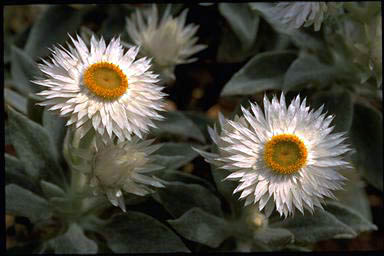
Build Heaven & Earth Links!
-
HH - Level 1 Deity
- Posts: 6245
- Joined: Fri Mar 05, 2004 8:40 am
UN World Environment Day 1 - 5 June 2005

UN World Environment Day 1 - 5 June 2005 Please click here for a listing of all events, workshops and tours
Visit:
http://www.wed2005.org/0.0.php
http://www.wed2005.org/2.0.php?PHPSESSI ... ab78247d45
Build Heaven & Earth Links!
-
HH - Level 1 Deity
- Posts: 6245
- Joined: Fri Mar 05, 2004 8:40 am
Rich Pockets of Green : "Sacred Groves"

Rich Pockets of Green : "Sacred Groves"
Many traditional societies all over the world revered and worshipped nature and considered certain plants and animals as sacred. Some communities also followed the practice of setting aside certain patches of land or forest as "sacred groves" dedicated to a deity or village God, protected and worshipped. In India sacred groves are found all over the country and abundantly along the Western ghats and the West coast and in several parts of Kerala, Karnataka, Tamil Nadu, Maharashtra, Madhya Pradesh, Rajasthan, Orissa and Himachal Pradesh.
According to Madhav Gagdil (1985), "Sacred groves ranged in extent from 50 hectares or more to a few hundred square metres. Where the network of sacred groves has remained intact till recent times, as in the South Kanara district of Karnataka, one can see that new formed islands of vegetation ranging in size from small clumps to a hectare or more, and originally covering perhaps five per cent of the land area. This has contributed to the preservation of trophical biological diversity, for we are still discovering new species of plants which have disappeared from everywhere else in these sacred groves." ...
Visit:
http://www.hinduonnet.com/folio/fo0006/00060480.htm
Build Heaven & Earth Links!
-
HH - Level 1 Deity
- Posts: 6245
- Joined: Fri Mar 05, 2004 8:40 am
Towards Green Today ... Cry for Green Space

Is our planet turning hostile to life? Summers are hotter now than before and the monsoon is failing. What could be the reason? Is there anything we can do about it?
Towards Green Today ... Cry for Green Space
A reputed cardiac surgeon in Chennai asked me recently, ``When did you last see sparrows?'' I was baffled, because I took them for granted and I presumed they were still around, chirping merrily. Then I realised that there weren't many more sparrows left - and they could be extinct sooner than later. ``I guess they have perished after eating pesticide-coated seeds and grains laced with artificial fertilizers,'' the surgeon said.
Our planet is turning hostile to life. Aren't the summers hotter now and haven't you noticed the monsoon failing? Aren't cyclones lashing countries round the world, and isn't Europe being drowned in floods? Haven't you noticed that nights are much hotter now than they were some years ago? The sun heats us for about 12 hours every day. The land warms faster than the sea, but after dusk, the heat absorbed by the ground is lost quickly whereas the sea retains it longer. This is why we have the landward and seaward breeze. The problem is that this heat bounces right back to earth because of a thick padding of gases, mainly carbon dioxide. These are known as greenhouse gases, and the reflected heat is the greenhouse effect - just as in a garden greenhouse where exotic plants are nurtured.
Plants use carbon dioxide to make food by photosynthesis during the day and release oxygen. Thus plants maintain the carbon dioxide-oxygen balance - as a ``sink'' to handle the carbon dioxide load. Oceans are also natural ``sinks''. But both these ``sinks'' together can manage a maximum load of 3.8 billion tonnes of carbon dioxide equivalent a year. The figure is large. It is the weight of 95 million children, each weighing 40 kg. ...
When only living things existed on this planet, there was no problem because the ``sinks'' could easily absorb the carbon dioxide that the living things exhaled. Even a world population of over six billion (in addition to other living things) would be no problem if there were no other source of carbon dioxide. Unfortunately, there are more ways in which carbon dioxide is generated today than before the Industrial Revolution that changed the way of life in the world.
Today we have cars, planes and trains using petroleum products to run. The problem with these fossil fuels (called so because forests which disappeared below the surface millions of years ago changed into petroleum because of temperature, pressure and other factors) is they are a non-renewable resource (it takes millions of years for buried forests to become petroleum) but they also generate carbon dioxide (in addition to other gases) when burnt.
With the amount of carbon dioxide in the air increasing rapidly, the load soon crossed the limit that the ``sinks'' could handle each year. And greenhouse gases began to accumulate, heating up the planet slowly but certainly.
The problem can be solved if every individual, every country agrees to stop using these fossil fuels. But can you imagine a life without cars, trains, and planes? And who pays for the damage already caused? That takes us to the politics of environment.
No country is willing to take the first step, because no one has found a fossil fuel substitute, except solar energy, wind energy and hydroelectric power which have limited use. The West's automobile industry is powerful and it opposes any move to find a substitute energy source. A good substitute would mean that the automobile industry would have to shift from fossil-fuel-using internal combustion engines to engines that needed no fossil fuel but generated power to move.
Why don't the developed countries pay for damage already caused? No country is willing to shoulder this burden. The World Summit on Sustainable Development at Johannesburg hopes to find a way out but no one is willing to give up on anything. No one seems to understand that unless everyone acts together and immediately, there will be disaster. The planet will heat up so much the polar ice caps will melt. The sea level will rise and wipe out parts of small and large island nations. There may come a time, when satellite images will show all countries shrunk in size like deflated balloons (because existing coastlines will have disappeared).
Because of the greenhouse gases, heat-related deaths will wipe out hundreds of thousands of people round the world, particularly in developing countries. But less population will not be a blessing to those who remain. Do the fewer sparrows today portend a bleak future for the planet?
There was a time we lived without electricity; there was a time when our forefathers never guessed what a car could look like; there was a time when travel took days and weeks. We have to wake up and strike a balance.
You have only one earth. Would you like the planet to melt after you are no more? If not, you do not have to sacrifice much - travel less; use your cars less and your bicycles more; plant trees wherever you can; and urge your parents to use solar appliances. After all, the earth is a beautiful planet. You must leave it behind for the future generations to be awed by its beauty as much as you are today.
Visit:
http://www.hinduonnet.com/thehindu/yw/2 ... 100200.htm
Build Heaven & Earth Links!
-
HH - Level 1 Deity
- Posts: 6245
- Joined: Fri Mar 05, 2004 8:40 am
Enjoy A TOYFUL Time!

Build Heaven & Earth Links!
-
HH - Level 1 Deity
- Posts: 6245
- Joined: Fri Mar 05, 2004 8:40 am
Joyful Time ... ONAM ... Say That Again : MALAYALIS ...

Made-to-order Onam ... The outdoors Onam days are over. It's TV Onam these days, when everyone spends a day before the TV. LEELA MENON muses on how much it has changed, with the present lifestyle of Malayalis.
Joyful Time ... ONAM ... Say That Again : MALAYALIS ...
# No youth belonging to the MTV generation will ever want to be clothed in the traditional Malayali dress, unless it is youth festivals or beauty contests! Today's Malayali garners his ideas, concepts, views and vision from TV, imbibed through TV ads. TV is the socialiser of today, the signpost to latest fashion, the source not only for entertainment but also the guide to lifestyles, décor, cuisine et al.
# Today's Onam has no kaikottikali for the women, no swings for the women and children, who have no trees in compounds or flats. Thalapanthu, parisamuttukali and other games for the men-folk to expend their energy are passé in the era of cricket. And the tigers playing pulikkali, for TV again, does so in cinematic dance steps. Boat races are for tourist extravaganzas. And it is offices and institutions that display the designer floral carpets and institute prizes for the best ones. Not to speak of the official Onam feast. Onam has gone `sarkari', and a promotional tool of tourism.
# In the past the Malayali made his floral carpets with flowers plucked from the compound or the neighbouring hillocks or paddy fields. It was a hilarious, joyful time for children; it kept them in touch with nature, with the environment. Onam cemented the bond of children with nature.
They learn to love Nature, which gave them the harvest festival, because Onam meant flowers and they plucked flowers. They could identify the plants and name them, pluck them the previous day and keep them fresh overnight, without fridges, they could learn to match the different colours on the carpets. The children competed between themselves to make the most number of rounds, the best carpets.
***** Today's .... (It's Different ALL-MADE-TO-ORDER ...)

Visit:
http://www.hinduonnet.com/thehindu/thsc ... 2/&prd=mp&
Build Heaven & Earth Links!
-
HH - Level 1 Deity
- Posts: 6245
- Joined: Fri Mar 05, 2004 8:40 am
Good morning HH sar
People are crazy, at times are strange. I am locked-in tight, I am out of range.
I used to care, but things have changed.
I used to care, but things have changed.
-
akhilis2cool - God!
- Posts: 11476
- Joined: Sat Apr 03, 2004 1:43 pm
- Location: Camp Swampy
Ajcha Diwas Mast Aso ... Akhilbhaula ... HAPPY SUNDAY ... &q
akhilis2cool wrote:Good morning HH sar
eh? kya?! ...
he kay! ... Ajcha Diwas Mast Aso ... Akhilbhaula ...  ... HAPPY SUNDAY ... "Cool God"!
Build Heaven & Earth Links!
-
HH - Level 1 Deity
- Posts: 6245
- Joined: Fri Mar 05, 2004 8:40 am
Environment : Groundwater ... Burning Issues

Survey of the Environment 2004
Groundwater is a source of drinking water for millions of rural and urban Indian families. According to some estimates, it accounts for nearly 80 per cent of the rural domestic water needs, and 50 per cent of the urban water needs in India. But in India a variety of land and water-based human activities are causing pollution of this precious resource. The new highway between Bangalore and Mysore has been in the thick of trouble. A look at the various controversies dogging the project. And finally some success stories - how community-based conservation can help local villagers and the mountain catlive in peaceful co-existence.
Survey of the Environment 2003
This book takes a peek into some of the burning issues on our environment (pun unintended). We first look at the feasibility, promises and pitfalls of a new networking solution to India's water problem - linking major river systems. Then two separate ecological challenges faced by Indian agriculture - organic farming and transgenic crops. Bhopal is revisited after 18 years, where the victims are suffering from pollution and rank injustice. And finally some environment success stories - the restoration of Chilka lake and the conversion of the jheel in Kolkata from a rubbish infested pit to one with clear water.
Visit:
http://www.hinduonnet.com/ebooks/eb0017.htm


Build Heaven & Earth Links!
-
HH - Level 1 Deity
- Posts: 6245
- Joined: Fri Mar 05, 2004 8:40 am
Joyous World ... Gracious World ... One of the Miracles of M

Rama and Sita,Mattancheri Palace, Kochi, Kerala, 17th century. The paintings of the palace provide a panoramic view of the stories of the Ramayana. Here we see Rama and Sita, on their return to Ayodhya. The paintings of Kerala reflect an affinity to the dance dramas of the land in their head dresses and ornamentation.
Joyous World ... Gracious World ... One of the Miracles of Man's Creation in Art
The cave has a marvellous lotus pond painted on the ceiling. It is a scene of the faithful gathering lotuses to place on the resting place of a tirthankara, a Jain saint. Elephants, buffaloes, geese and fish frolic in the waters overflowing with beautiful lotuses. The special qualities of the Indian artist are seen at their best in the paintings of animals, birds and plants: in the Indian vision, these share equally with human beings the essence of life and spirit.
The painter has used the occasion to present us a joyous world. He brings to us a sense of sublime happiness - a fish swims in the waters, an elephant appears to smile, and men gather lotuses that are larger than themselves. It is a gracious world. The lotuses are large and shaped with tender care, reflecting the beauty and grace of the human figures. In fact, this may be one of the most beautiful depictions of flowers in the entire realm of art.
The lotus pond at Sittannavasal is one of the miracles of man's creation in art. One is reminded of an inscription at Ajanta, which proclaims: "The joy of giving filled him so much that it left no space for the feeling of pain." And indeed, at Sittannavasal, joy fills the painting from wall to wall.
Visit:
http://www.hinduonnet.com/thehindu/thsc ... 2/&prd=mp&
Build Heaven & Earth Links!
-
HH - Level 1 Deity
- Posts: 6245
- Joined: Fri Mar 05, 2004 8:40 am
Re: Joyous World ... Gracious World ... One of the Miracles
...
Visit:
*****
[b]***** Oops ... Visit: http://www.hinduonnet.com/thehindu/thsc ... prd=fline&
[/quote]Build Heaven & Earth Links!
-
HH - Level 1 Deity
- Posts: 6245
- Joined: Fri Mar 05, 2004 8:40 am
Thank You, "enigma" ... We Look Forward To Some en
enigma wrote:Good posts HH sir
Thank You, "enigma" ... We Very Much Look Forward To Some Real enigMAGIC! ... TOO!
Build Heaven & Earth Links!
-
HH - Level 1 Deity
- Posts: 6245
- Joined: Fri Mar 05, 2004 8:40 am
Re: Thank You, "enigma" ... We Look Forward To Som
HH wrote:enigma wrote:Good posts HH sir
Thank You, "enigma" ... We Very Much Look Forward To Some Real enigMAGIC! ... TOO!
Sure HH sir, i miss posting on earth links

-

enigma - Level 1 Lord

- Posts: 2499
- Joined: Wed Nov 03, 2004 12:03 pm
'Shanti' Wind Chimes ... Do Hear Some Real enigMAGIC Chimes!

'Shanti' Wind Chimes ...
These chimes are simply amazing. I heard them for the first time at the end of a yoga class and immediately knew their power. The beautiful sound brought tears to my eyes. They have multiple applications due to their incredible resonance. They are wonderful in a healing capacity. This is a lovely gift most women will love. Please take a moment to listen to them- they are enchanting.
* Do Hear Some Real enigMAGIC Chimes! ...
The unique Carillon 'Shanti' Chimes are high quality musical instruments, hand made in the Pyrenees mountains. Each chime is the result of meticulous craftsmanship.
Eight chords of different lengths are welded with silver into the metal plate at the base of the resonance tube. Extremely precise tuning creates a harmonic play of clear tones and overtones. The overtones of the shorter chords gradually dominate and become fundamentals, thus forming a circular tone range with no beginning nor end.
Shanti Chimes come in several tunings, each with its specific magic timbre. They are protected with a varnish coating. Listen to all five tunings to pick your favorite.
Hold the chime by the upper cord and move it gently. The crystalline, relaxing sound may leave you in quiet wonder. Outside, sheltered from rain, as it plays with the wind it will carry you away on an unexpected melody.
Visit:
http://www.comfortsoup.com/inspiration/windchimesm.html

Build Heaven & Earth Links!
-
HH - Level 1 Deity
- Posts: 6245
- Joined: Fri Mar 05, 2004 8:40 am
Green Dream ... Green Enigma ...

Green Dream ... Green Enigma ...
Visit:
http://thor.info.uaic.ro/~busaco/paint/ ... nDream.jpg
http://thor.info.uaic.ro/~busaco/paint/ ... Enigma.jpg


Build Heaven & Earth Links!
-
HH - Level 1 Deity
- Posts: 6245
- Joined: Fri Mar 05, 2004 8:40 am
113 posts
• Page 3 of 5 • 1, 2, 3, 4, 5
Return to The Hyderabadi Planet!
Who is online
Users browsing this forum: No registered users and 10 guests
ADVERTISEMENT
SHOUTBOX!
{{ todo.summary }}... expand »
{{ todo.text }}
« collapse
First | Prev |
1 2 3
{{current_page-1}} {{current_page}} {{current_page+1}}
{{last_page-2}} {{last_page-1}} {{last_page}}
| Next | Last
{{todos[0].name}}
{{todos[0].text}}
ADVERTISEMENT
This page was tagged for
Neverland &Prd.com
sittannavasal-tourism development
About Hyderabad
The Hyderabad Community
Improve fullhyd.com
More
Copyright © 2023 LRR Technologies (Hyderabad) Pvt Ltd. All rights reserved. fullhyd and fullhyderabad are registered trademarks of LRR Technologies (Hyderabad) Pvt Ltd. The textual, graphic, audio and audiovisual material in this site is protected by copyright law. You may not copy, distribute or use this material except as necessary for your personal, non-commercial use. Any trademarks are the properties of their respective owners.